The University of Applied Sciences Kaiserslautern is system-accredited systemreakkreditiert. The following degree programs have undergone the internal accreditation process to date:
- M.Eng. Process Engineering - while working
Akkreditiert bis: 30.09.2029
- M.Eng. Electrical Engineering - while working
Akkreditiert bis: 30.09.2029
- B.Eng. Electrical Engineering - apprenticeship integrated (initial accreditation)
Akkreditiert bis: 30.09.2028
- B.Eng. Mechanical Engineering - apprenticeship integrated (initial accreditation)
Akkreditiert bis: 30.09.2028
- B.Eng. Mechatronics - apprenticeship integrated (initial accreditation)
Akkreditiert bis: 30.09.2028
- B.Eng. Electrical Engineering - while working (previously: B.Eng. Automation Technology)
Akkreditiert bis: 30.09.2030
- B.Eng. Mechanical Engineering - while working (previously: B.Eng. Process Engineering)
Akkreditiert bis: 30.09.2030
- B.Eng. Industrial Engineering - while working (previously: B.Eng. Industrial Engineering)
Akkreditiert bis: 30.09.2030
- B.Eng. Mechatronics - while working
Akkreditiert bis: 30.09.2030
- B.Eng. Electrical Engineering
Akkreditiert bis: 30.09.2030
- B.Eng. Electrical Engineering - apprenticeship integrated (Initial accreditation)
Akkreditiert bis: 30.09.2030 - B.Eng. Industrial Engineering
Akkreditiert bis: 30.09.2030 - B.Eng. Industrial Engineering - apprenticeship integrated (Initial accreditation)
Akkreditiert bis: 30.09.2030 - B.Eng. Mechanical Engineering
Akkreditiert bis: 30.09.2030 - B.Eng. Mechanical Engineering - apprenticeship integrated (Initial accreditation)
Akkreditiert bis: 30.09.2030 - B.Eng. Mechatronics
Akkreditiert bis: 30.09.2030 - B.Eng. Mechatronics - apprenticeship integrated (Initial accreditation)
Akkreditiert bis: 30.09.2030 - B.Eng. Energy Engineering (Previously: Energy-efficient systems)
Akkreditiert bis: 30.09.2030 - B.Eng. Energy Engineering - apprenticeship integrated
Akkreditiert bis: 30.09.2030 - B.Eng. Digital Engineering
Akkreditiert bis: 30.09.2030 - B.Eng. Digital Engineering - apprenticeship integrated
Akkreditiert bis: 30.09.2030 - M.Sc. Mechanical engineering / Mechatronics
Akkreditiert bis: 30.09.2027 - M.Sc. Electrical Engineering and Information Technology (optional double degree)
Akkreditiert bis: 30.09.2027
- M.Eng. Digital Engineering (Initial accreditation)
Akkreditiert bis: 30.09.2027
- B.Sc. Angewandte Pharmazie (ALPHA)
Akkreditiert bis: 30.09.2029
- B.Eng. Angewandte Chemie
Akkreditiert bis: 30.09.2029
- B.Sc. Industriepharmazie (vorher: berufsbegleitend, neu: dual)
Akkreditiert bis: 30.09.2031
- M.Sc. Refinement and Sustainanability of Polymer and Composite Products(vorher: Refinement of Polymer and Composite Products)
Akrediert bis: 29.02.2032
- M.Sc. Biobasierte Polymerchemie (vorher: Angewandte Polymerchemie)
Akkreditiert bis: 30.09.2029
- B.Sc. Orthopädieschuhtechnik (Erstakkreditierung) - wird eingestellt
Akkreditiert bis: 30.09.2026
- B.Eng. Leather and Textile Engineering (Englisch und Bilingual) (vorher: Leder- und Textiltechnik)
laufend
- B.Eng. Logistik - wird eingestellt
Akkreditiert bis: 30.09.2026
- M.Sc. Wirtschaftsingenieurwesen - Logistik- und Produktionsmanagement
laufend
- B.A. Innenarchitektur
Akkreditiert bis: 30.09.2029
- M.A. Innenarchitektur
Akkreditiert bis: 30.09.2029
- B.A. Architektur
Akkreditiert bis: 30.09.2029
- M.A. Architektur
Akkreditiert bis: 30.09.2029
- B.A. Virtual Design (Fachbeiratsmodell)
laufend, akkrediert bis: 30.09.2029
- M.A. Virtual Design (Fachbeiratsmodell)
laufend, akkreditiert bis: 30.09.2029
- B.Eng. Bauingenieurwesen (Fachbeiratsmodell)
laufend
- M.Eng. Bauingenieurwesen (Fachbeiratsmodell)
laufend
- B.Eng. Bauingenieurwesen - dual (Fachbeiratsmodell)
laufend
- B.A. Fernstudiengang Betriebswirtschaft (Vollzeit, berufsbegleitend, berufsintegrierend)
Akkreditiert bis: 30.09.2028
- M.Sc. Information Management
Akkreditiert bis: 30.09.2028
- B.A. Wirtschaft und Recht
Akkredietiert bis: 30.09.2032
- B.Sc. Wirtschaftsinformatik
Akkreditiert bis: 30.09.2032
- B.Sc. Technische Betriebswirtschaft - wird eingestellt
Akkreditiert bis: 30.09.2026
- B.A. Mittelstandsökonomie - wird eingestellt
Akkreditiert bis: 30.09.2026
- B.A. Finanzdienstleistung
Akkreditiert bis: 30.09.2032
- B.A. Finanzdienstleistungen - dual
Akkreditiert bis: 30.09.2032
- B.A. International Business Administration
Akkreditiert bis: 30.09.2026
- B.Sc. Industrial & Digital Management (Erstakkreditierung) - wird eingestellt
Akkreditiert bis 30.09.2026
- M.A. Financial Services Management (optionaler Double Degree)
laufend
- M.A. International Management and Finance (Double Degree)
laufend
- M.A. Mittelstandsmanagement - wird eingestellt
Akkreditiert bis 30.09.2026
- B.A. Finanzberatung für Unternehmen und Privatkunden
Akkreditiert bis: 30.09.2027
- M.Sc. Wirtschaftsingenieurwesen - Logistik- und Produktionsmanagement
Akkreditiert bis: 30.09.2027
- M.A. Wirtschaft und Recht
laufend, akkreditiert bis: 29.02.2028
- M.Sc. Applied Life Sciences
Akkreditiert bis: 29.02.2028
- M.Sc. Systems Engineering - Micro-Electro-Mechnical Systems / Biomedical Micro Engineering (vorher: M.Eng. Micro Systems and Nano Technologies)
Akkrediert bis: 29.02.2028
- B.Sc. Angewandte Informatik
Akkreditiert bis: 30.09.2030
- B.Sc. Angewandte Informatik - dual
Akkreditiert bis: 30.09.2030
- B.Sc. Digital Media Marketing
Akkreditiert bis: 30.09.2030
- B.Sc. Digital Media Marketing - dual
Akkreditiert bis: 30.09.2030
- M.A. Digital Media Marketing
laufend (Erstakkreditierung)
- B.Sc. Medieninformatik
Akkreditiert bis: 30.09.2030
- B.Sc. Medieninformatik - dual
Akkreditiert bis: 30.09.2030
- B.Sc. Medizininformatik
Akkreditiert bis: 30.09.2030
- B.Sc. Medizininformatik - dual
Akkreditiert bis: 30.09.2030
- M.Sc. Informatik
Akkreditiert bis: 30.09.2030
- M.Sc. Informatik - dual
Akkreditiert bis: 30.09.2030
- M.Sc. Computer Science - coop.
Akkreditiert bis: 30.09.2030
- B.Eng. Digital Engineering
Akkreditiert bis: 30.09.2030
- B.Eng. Digital Engineering - dual
Akkreditiert bis: 30.09.2030
- B.Sc. Medizin- und Biowissenschaften
laufend
- B. Sc. Biomedical Micro Engineering
laufend, akkreditiert bis: 30.09.2027
- B.Sc. Applied Life Sciences
laufend, akkreditiert bis: 30.09.2027
- B.Eng. Micro and Nano Engineering (vorher: Mikrosystem- und Nanotechnologie)
laufend, akkreditiert bis: 30.09.2027
- M.Eng. Digital Engineering
Akkreditiert bis: 30.09.2027
- B.Sc. Physician Assistant
Akkreditiert bis 30.09.2030
Seal Award Process
The University of Applied Sciences Kaiserslautern (HSKL) has been system-accredited since 2017 and is therefore authorized to accredit its degree programs internally in accordance with legal requirements. With the support of the evalag agency, HSKL has successfully completed the system accreditation process for the second time and is accredited until September 30, 2031. There are three different procedures for internal accreditation at HSKL. In the internal initial accreditation and internal quality assurance (reaccreditation) procedures, the accreditation period is six years. The third procedure is an advisory board model, in which the accreditation period is eight years. The courses are designed in accordance with the state-specific requirements for study accreditation (State Ordinance on Study Accreditation in Rhineland-Palatinate), thus ensuring compliance with recognized standards in study and teaching. The internal accreditation procedures at HSKL also take into account all the framework requirements of the Standing Conference of the Ministers of Education and Cultural Affairs (KMK) and the Accreditation Council (AR). The internal accreditation procedure can be carried out for individual degree programs, degree program clusters, or combined degree programs.
Procedural steps for initial internal accreditation
Phase 1:
| The administrative office arranges an appointment with the degree program for an initial meeting. The key steps and objectives of the process are discussed. The external expert group is assembled by decision of the SQL (Senate Committee for Quality & Teaching). The SQL also decides at this point by critera kriteriengeleitet, whether this initial accreditation procedure will be submitted to the External Quality Advisory Board (eQB) for consultation and decision-making. The administrative office provides the degree program with guidelines and a template for preparing a self-assessment report and is available for questions and consultation. At the same time, the administrative office sets up the online program documentation on OLAT or Seafile. In this phase, an initial rough check of the formal criteria is also carried out (administrative office) and, together with the program, the expert workshop is prepared in terms of content and organization. |
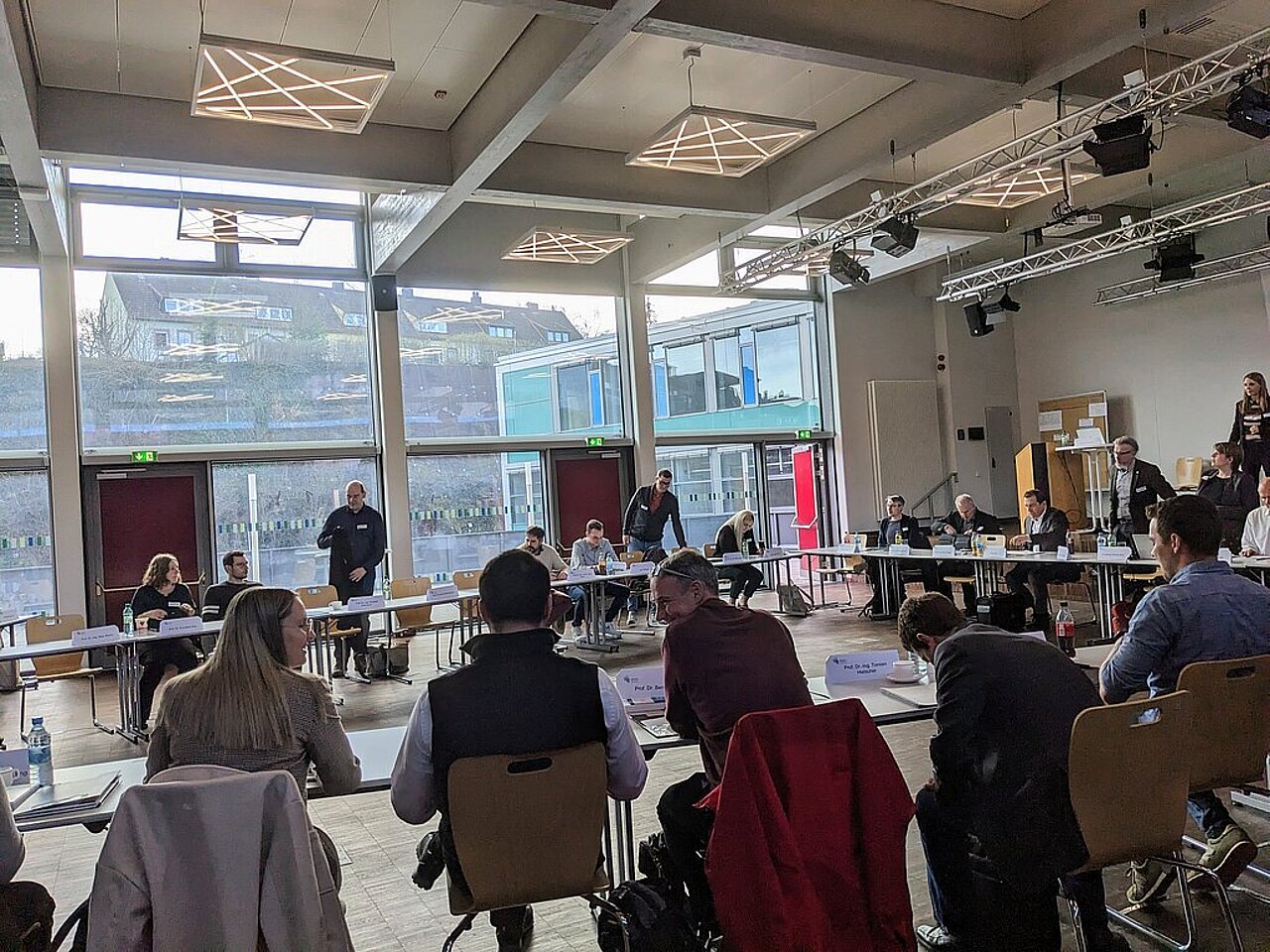
Phase 2: | Conducting the expert workshop with EXTERNAL EXPERTS (either on site or digitally, if necessary): joint discussion of accreditation-related topics relating to the degree program. Subsequently, the minutes of the expert workshop are drawn up with the expert suggestions and agreed upon with the participants. Those responsible for the degree program prepare a statement on the expert suggestions. |
Phase 3: | A synopsis is created (administrative office) that compiles the results of the proceedings to date. This is discussed by the SQL, deadlines are set, and a decision is made. Depending on the decision made in phase 1, the synopsis is now either forwarded directly to the External Quality Advisory Board with a recommendation for a decision or directly to the president. If the synopsis is submitted to the External Quality Advisory Board for consultation, the board will make a recommendation to the president of the university in accordance with its decision-making criteria. If the procedure is successful, the president will grant provisional accreditation to the degree program. |
Phase 4: | The agreed measures will be implemented by the deadlines and a set of examination regulations will be adopted by the departmental council and the senate. The audit report will be prepared by the administrative office and approved by the SQL. Based on the decision, the president will announce the final accreditation decision, thereby concluding the process. The accreditation certificate will be presented to those responsible for the degree program at the next possible Senate meeting. |
Procedural steps for internal reaccreditation
Phase 1:
| The administrative office arranges an appointment with the degree program and the university management for an initial meeting. The key steps and objectives of the process are discussed. The expert group is assembled by decision of the SQL (Senate Committee for Quality & Teaching). The degree program reviews existing degree program documents, updates them if necessary, and compiles a list of key questions. The administrative office conducts a special survey of students and prepares the development report, which is commented on by the program director. At the same time, the administrative office sets up the online program documentation on OLAT or Seafile. In this phase, an initial rough check of the formal criteria is also carried out (administrative office) and, together with the program, the content and organization of the expert workshop is prepared. |
Phase 2: | Conducting the expert workshop with EXTERNAL EXPERTS (either on site or digitally, if necessary): joint discussion of accreditation-related topics relating to the degree program. Subsequently, the minutes of the expert workshop are drawn up with the expert suggestions and agreed upon with the participants. Those responsible for the degree program prepare a statement on the expert suggestions. |
Phase 3: Determination of measures | A development concept is drawn up (administrative office) that compiles the results of the procedures to date. This is discussed by the SQL, deadlines are set, a decision is made, and it is forwarded to the university management as a basis for the development meeting. In the development meeting between the university management, departmental representatives, and program representatives, the tasks and proposals of the development concept are adjusted if necessary and then agreed upon as binding. |
Phase 4: | The agreed measures will be implemented by the deadlines and, if necessary, new examination regulations will be adopted by the departmental council and senate. The audit report will be prepared by the administrative office and decided upon by the SQL. If this decision is positive, i.e., if all points have been implemented in accordance with the agreed tasks, the SQL will recommend that the president present the accreditation certificate at the next possible Senate meeting. |